
How to Create Your Own Leveling System for a Manhwa Story
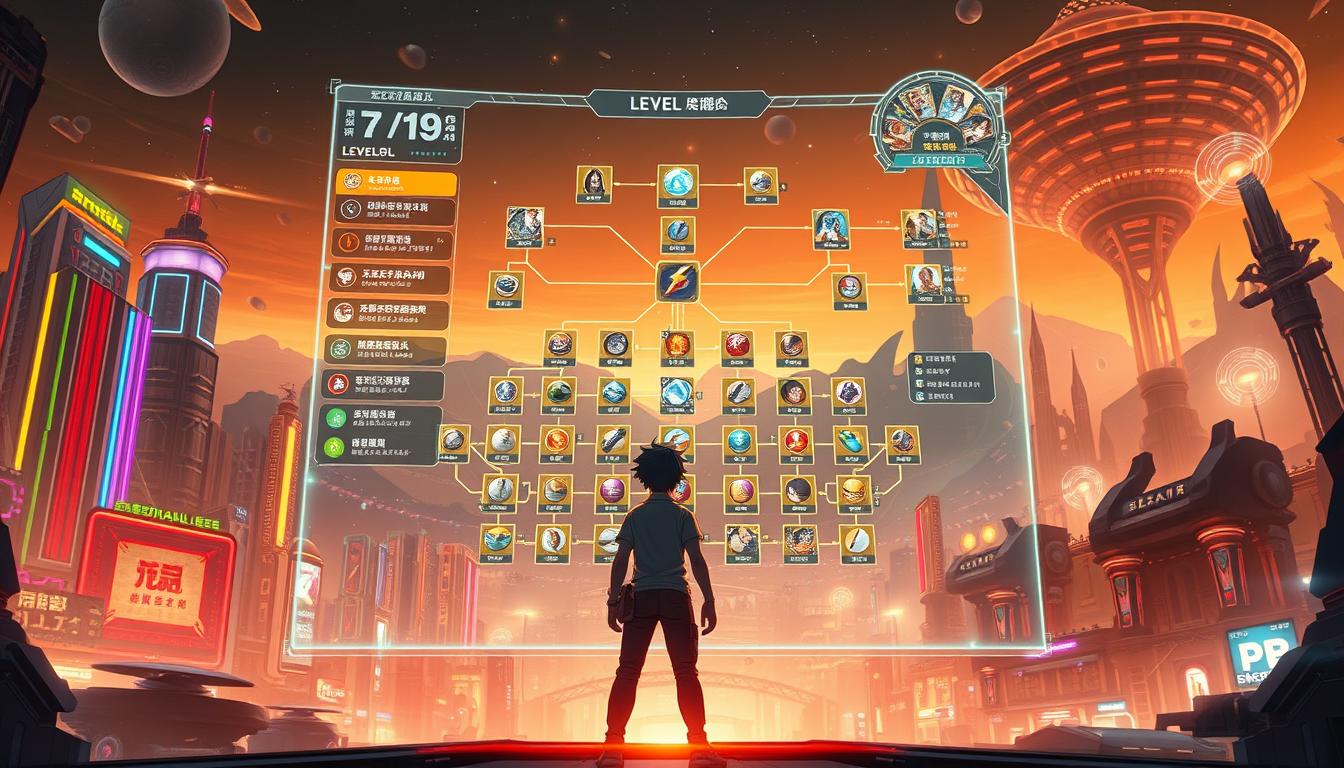
Creating a manhwa leveling system is key for keeping readers hooked and characters growing. A good leveling system makes the story more exciting and engaging.
In manhwa, a leveling system is a guide for character growth. It helps creators build interesting storylines. By adding elements like character growth and challenges, the story gets better.
Good manhwa creation mixes the leveling system with other story parts. This includes plot twists and how characters interact. This way, creators make a story that readers love.
Let’s dive into making a leveling system. We’ll look at how it affects storytelling and character growth. This will help manhwa creators a lot.
Understanding Leveling Systems in Manhwa
In manhwa, leveling systems are key to keeping readers hooked and enhancing the story. They help shape the story, guiding character growth and plot twists.
The Role of Progression in Storytelling
Progression is crucial in action, adventure, and fantasy stories, which are common in manhwa. It pushes characters to grow and moves the plot along, building suspense. Good progression makes the story more thrilling and real.
Common Types of Leveling Systems
Manhwa often features different leveling systems, each with its own strengths.
Numeric Level Systems
Numeric systems are simple, with characters advancing through numbered levels and gaining power. It’s easy to follow and gives clear goals for characters.
Class and Rank Systems
These systems sort characters into groups based on abilities or roles. It allows for varied character growth and complex stories.
Skill-Based Progression
This system focuses on improving specific skills or abilities. It’s great for making characters unique and detailed.
| Leveling System Type | Description | Example |
|---|---|---|
| Numeric Level Systems | Characters progress through numbered levels | Solo Leveling |
| Class and Rank Systems | Characters categorized into tiers or classes | Tower of God |
| Skill-Based Progression | Focus on developing specific skills or abilities | The Gamer |
Why Readers Love Power Progression
Readers love seeing characters grow and overcome obstacles in manhwa. It’s motivating and keeps them eager to see what’s next. Power progression builds anticipation and suspense, making the story more exciting.
Popular Manhwa Leveling Systems Analysis
Manhwa like ‘Solo Leveling’ and ‘Tower of God’ have won fans with their detailed leveling systems. They offer a lot of ideas for creators.

Solo Leveling’s Numeric System
‘Solo Leveling’ tracks character growth with a number system. It uses Hunter Ranks and Stats.
Hunter Ranks and Stats
The manhwa has a simple ranking system. Hunters move up ranks based on their skills and achievements.
Job Classes and Skills
Characters can pick from different job classes. Each class has special skills that add to the leveling system.
Tower of God’s Position-Based Hierarchy
‘Tower of God’ has a system based on position. Characters climb the tower by beating challenges and opponents.
The Gamer’s RPG-Style Mechanics
‘The Gamer’ uses RPG mechanics like experience points and skill trees. This makes the story fun and familiar for readers.
Lessons from Successful Systems
Looking at these manhwa leveling systems shows what makes them great:
- Clear Progression Paths: Each system has a clear way for characters to grow.
- Unique Twists: Adding special elements, like ‘Tower of God’s’ hierarchy, keeps the story interesting.
- RPG Elements: Using RPG mechanics, as in ‘The Gamer,’ makes the story more engaging.
By learning from these systems, creators can make their own unique and exciting leveling mechanics.
Determining Your Leveling System’s Purpose
To make your Manhwa truly immersive, define your leveling system’s purpose. It should fit well with the story and character arcs. This step is key to making sure the leveling system adds to the story, not takes away from it.
Plot-Driven vs. Character-Driven Systems
First, decide if your leveling system will be plot-driven or character-driven. A plot-driven system moves the story forward with challenges and milestones. On the other hand, a character-driven system focuses on the characters’ growth and development. Knowing this helps create a story that flows well.
Setting Power Ceiling and Floor
It’s important to set a power ceiling and floor for your leveling system. The power ceiling prevents the story from getting too predictable. The power floor makes sure characters start with a good level of ability, making their growth meaningful.
Defining Growth Trajectories
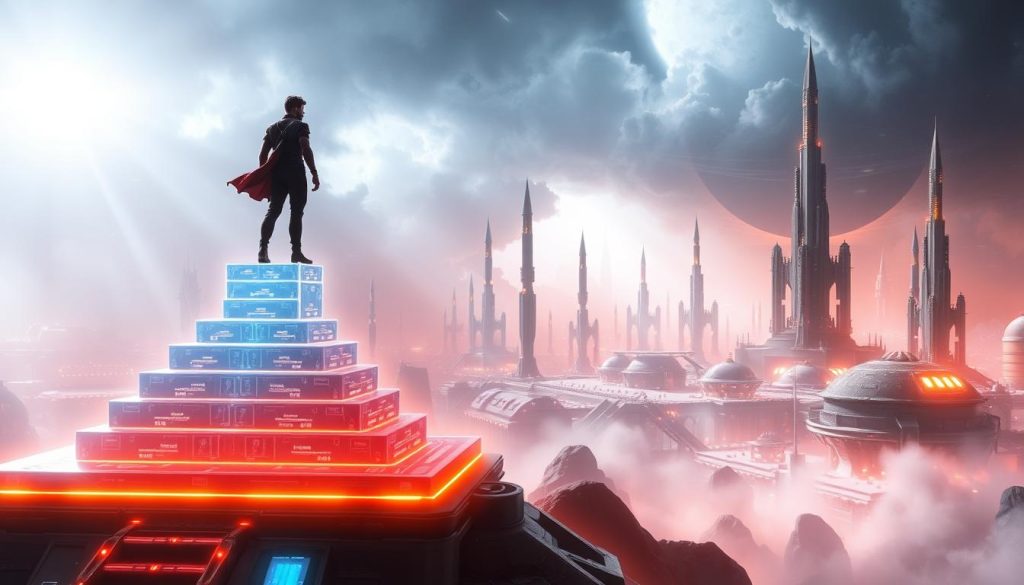
Growth trajectories show how characters will grow in the story. You need to decide how fast they’ll progress and what milestones they’ll hit.
Linear vs. Exponential Growth
Characters can grow in a linear or exponential way. Linear growth is steady and predictable. Exponential growth is more dramatic and exciting. The choice depends on the story’s pace and tension.
Plateau and Breakthrough Moments
Adding plateaus and breakthrough moments can make your story richer. Plateaus let characters solidify their gains. Breakthrough moments are big leaps that keep the story exciting.
By carefully planning your leveling system, you can craft a story that grabs your audience. It will make the Manhwa experience even better.
How to Create Your Own Leveling System for a Manhwa Story
To grab your audience’s attention, a good leveling system is key in manhwa creation. A well-thought-out leveling system boosts player interest and deepens your story.
Establishing Core Mechanics
The heart of any leveling system is its core mechanics. You need to pick the type of progression that moves your story forward.
Numeric vs. Rank-Based Systems
Choosing between numeric and rank-based systems affects your story. Numeric systems show clear, measurable growth. Rank-based systems measure advancement in a more qualitative way.
- Numeric systems work well for stories that focus on numbers.
- Rank-based systems fit better with stories about prestige and hierarchy.
Skill Trees vs. Linear Progression
Deciding on skill trees or linear progression is crucial. Skill trees let players customize and add complexity. Linear progression offers a simpler, more guided path.
- Skill trees are great for stories that value character growth and choice.
- Linear progression suits stories with a clear, set path.
Defining Stats and Attributes
Character stats and attributes are essential in any leveling system. They shape how characters grow and interact with their world.
Physical Attributes
Physical attributes like strength, agility, and endurance are key in RPGs. They affect combat, exploration, and physical actions.
Mental and Special Abilities
Mental and special abilities add depth to your characters. These can include magical powers, psychic abilities, or unique skills that set your characters apart.
| Attribute Type | Description | Example |
|---|---|---|
| Physical | Influences physical interactions | Strength, Agility |
| Mental/Special | Enables unique abilities | Magic, Telekinesis |
Creating Unique System Rules
To make your leveling system unique, create special rules for progression and character growth.
Conditions for Advancement
Clear conditions for advancement create a sense of achievement. This could be through quests, defeating enemies, or reaching milestones.
Special System Features
Special system features add interest to your leveling system. Examples include prestige classes, hidden abilities, or unique power-ups.
By designing these elements well, you can craft a leveling system that enhances your manhwa story and engages your readers.
Designing Progression Mechanics
Progression mechanics are key to any leveling system. They show how characters grow and evolve. These mechanics help create a story that grabs readers and keeps them hooked.
Experience Points and Level-Ups
Characters earn experience points (XP) by doing tasks, beating enemies, or hitting milestones. As they collect XP, they level up. This unlocks new skills or boosts old ones. It’s a method many readers know and love.
Achievement-Based Progression
Some systems use achievement-based progression. Characters move forward by reaching certain goals or overcoming challenges. This makes the game more varied and fun.
Quest and Mission Systems
Quests and missions give characters clear goals. They often come with rewards when finished. These systems help guide the story and character growth.
Training and Time-Based Growth
Training and time-based growth let characters get better over time. They can improve through training or just by passing time in the story. This builds a feeling of steady improvement.
Special Events and Breakthroughs
Special events or breakthroughs add big milestones to character growth. These can happen through certain actions, story events, or even chance. They offer surprises and new chances to grow.
| Progression Mechanic | Description | Example |
|---|---|---|
| Experience Points | Earning XP to level up | Defeating 100 enemies |
| Achievement-Based | Completing specific challenges | Completing a difficult quest |
| Quest and Mission | Structured objectives with rewards | Retrieving a lost artifact |
By mixing these mechanics, creators can make a leveling system that’s engaging and fits their story perfectly. The goal is to keep readers interested and give them a fulfilling story.
Balancing Your Leveling System
A successful Manhwa balances character growth with challenges. A good leveling system should support the story and character growth, not take over.
Preventing Power Creep
Power creep happens when characters get too strong too fast. This makes the story less exciting. To avoid this, set clear limits on character power and growth.
Creating Meaningful Challenges
Challenges keep the story interesting. By adding obstacles, characters must grow and improve. This keeps readers hooked and invested.
Establishing Rival Characters
Rival characters help the main character grow. They show what the hero can achieve. Good rivals add depth and create interesting conflicts.
Building in Limitations and Weaknesses
Limitations and weaknesses make characters real and relatable. Flaws and vulnerabilities add depth to their journey.
Cost of Power
The cost of power means characters must pay a price for their abilities. This could be physical, moral, or other sacrifices.
Trade-offs and Sacrifices
Trade-offs and sacrifices add depth to the story. They make characters’ growth more meaningful. This makes the story more engaging.
Here’s a table showing how different leveling system designs affect the story:
| Approach | Character Development | Story Engagement |
|---|---|---|
| Unlimited Power | Limited by lack of challenges | Decreased due to predictability |
| Balanced Progression | Enhanced through challenges | Increased due to tension and surprises |
| High Cost of Power | Complex due to sacrifices | Engaging due to moral dilemmas |
By balancing the leveling system, creators can make a compelling story. This story will engage readers and help characters grow.
Integrating the System with Your Story
A good leveling system can make your manhwa better by adding to the plot and character growth. It’s key to making a story that grabs and keeps readers.
Using Levels to Drive Plot Points
Levels can add tension and conflict by bringing challenges for characters to face. For instance, a character might need to level up to enter a new area or beat a tough foe. This helps move the story along and keeps readers on the edge of their seats.
Character Development Through Progression
As characters level up, they gain new skills and abilities. This shows their personality and backstory. It also lets them grow and change, making the story more fun.
World-Building Around Your System
The leveling system can shape your manhwa’s world, making it rich and real. Societal structures based on levels can change the culture and politics. The historical context of the system adds depth to the story.
Societal Structures Based on Levels
The system can affect the social order, with higher levels having more power. This leads to interesting conflicts and relationships in the story.
Historical Context for Your System
Having a history for your leveling system makes the world more believable and engaging. This includes the system’s origins, key events, and how it has changed over time.
Avoiding Common Integration Pitfalls
To avoid common mistakes, make sure the leveling system supports the story, not takes over. Balance it with other story elements and prevent power creep, where characters get too strong too fast.
Visualizing Your Leveling System
To make your leveling system come alive, think about how it will look to your audience. In manhwa creation, how it looks is key to keeping readers hooked and enhancing their experience.
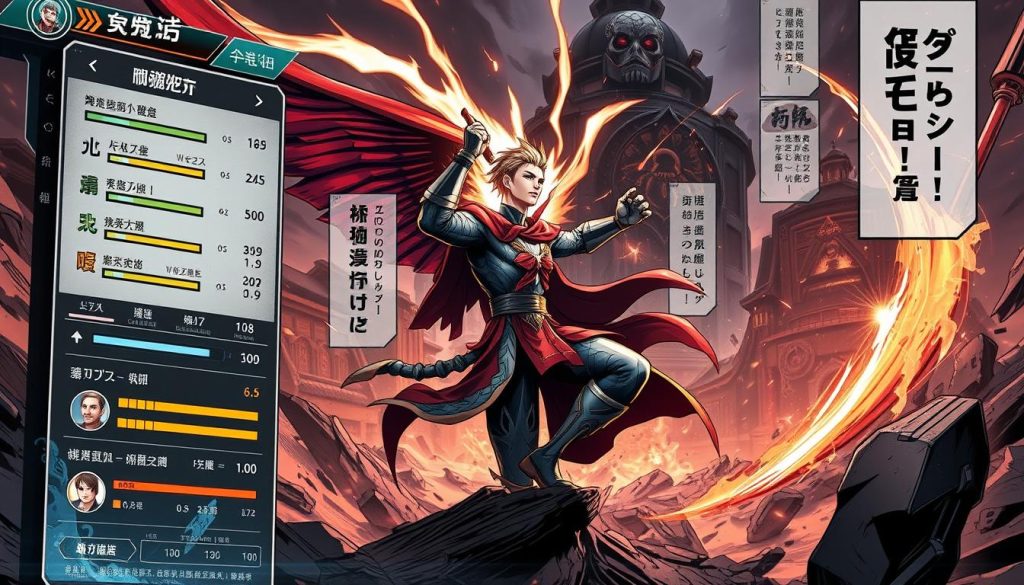
UI Design for Status Screens
The design of status screens is very important in leveling system design. It should be easy to understand, showing a character’s stats and progress clearly. Using simple fonts and neat layouts helps a lot.
Visual Effects for Level-Ups
Visuals for level-ups can really add to the thrill of moving forward in your manhwa. Adding RPG mechanics like glowing effects or animations can make these moments stand out and feel special.
Communicating Power Levels to Readers
It’s crucial to share power levels in a way that keeps readers interested. Here are some ways to do it:
- Color Coding and Iconography: Using colors and icons for different stats or abilities helps readers get the info fast.
- Character Reactions and Dialogue: How characters react and talk during level-ups or when using abilities gives clues about their power and feelings.
Color Coding and Iconography
Color coding can show different stats or abilities. For example, magic might be in blue, and strength in red.
Character Reactions and Dialogue
Characters’ reactions during big moments, like level-ups, show their feelings. This makes the story feel more real and engaging for readers.
Artistic Considerations for Manhwa Format
The art style of your manhwa should match the leveling system’s look. Think about the panel layout, character design, and overall look to make sure they fit your story’s tone and theme.
Conclusion
A well-designed manhwa leveling system is key to keeping readers hooked and moving the story along. It’s important to understand how progress affects the story and characters. This way, creators can make a system that boosts their manhwa’s impact.
Trying out different mechanics, like numbers or RPG attributes, can help find the right fit for the story. It’s crucial to balance power levels, make challenges meaningful, and tie the system to the story. This makes the manhwa more engaging.
Using good UI design and visual effects can make the leveling system more immersive. A thoughtful approach to character growth and storytelling will create a manhwa that grabs readers’ attention. It will leave a lasting impression.
FAQ
What is a leveling system in manhwa?
In manhwa, a leveling system tracks how characters grow. It shows their skill and power increase over time.
What are the common types of leveling systems used in manhwa?
Manhwa often uses numeric levels, class and rank systems, or skill-based growth. “Solo Leveling” and “Tower of God” are great examples.
How do I determine the purpose of my leveling system?
First, decide if your system is for the plot or the characters. Then, set a clear path for growth by defining the limits of power.
What are some key elements to consider when creating a leveling system?
Key elements include setting core mechanics and defining stats. Also, create unique rules for advancement and special features.
How can I balance my leveling system to prevent power creep?
Balance by making challenges meaningful and introducing rival characters. Include limitations and the cost of power to keep things fair.
How do I integrate my leveling system with the story?
Use levels to drive the plot and help characters grow. Make sure it fits well with the story and world, avoiding common mistakes.
What are some effective ways to visualize my leveling system?
Use UI design for status screens and visual effects for level-ups. Color coding, icons, and dialogue can also help show power levels.
Can I use different progression mechanics in my leveling system?
Yes, you can mix different mechanics. Use experience points, achievements, quests, training, and special events to keep it interesting.
How do I create a compelling leveling system for my manhwa?
Focus on balance, narrative integration, and clear visuals. Be open to trying different mechanics to find the best fit for your story.