
Manhwa vs. Manga vs. Manhua: What’s The Difference? A Beginner’s Guide
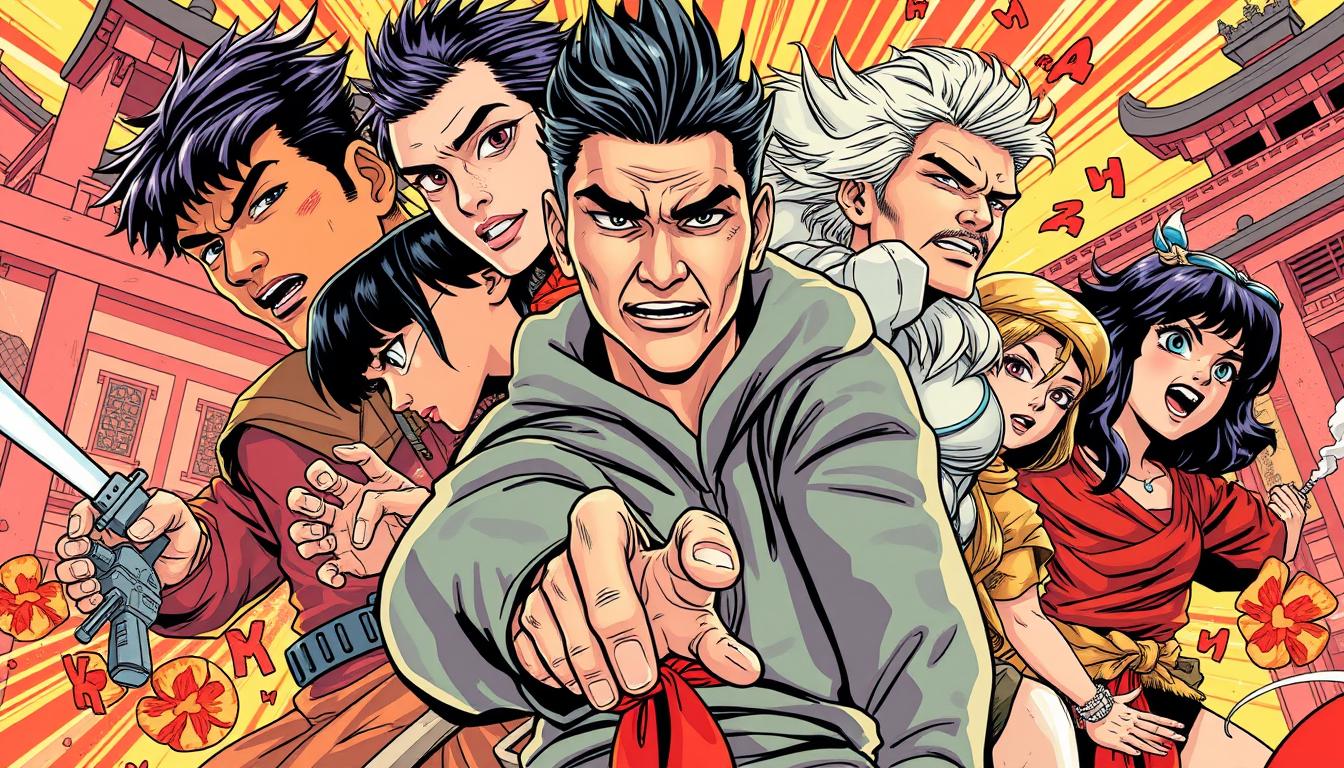
The world of Asian comics is huge and varied. Manga, Manhwa, and Manhua are comics from Japan, Korea, and China. Each has its own special style and stories.
For new fans, learning about cultural influences and reading styles can be exciting and a bit confusing. Each comic style is shaped by the history and culture of its country.
By looking into the special traits of Manga, Manhwa, and Manhua, fans can really enjoy the art and stories in these comics.
The World of Asian Comics: An Overview
Asian comics have grown from local favorites to a global hit. They attract many fans worldwide. “Asian comics” includes Japanese manga, Korean manhwa, and Chinese manhua. Each has its own history, style, and cultural background.
The Global Rise of Asian Comic Styles
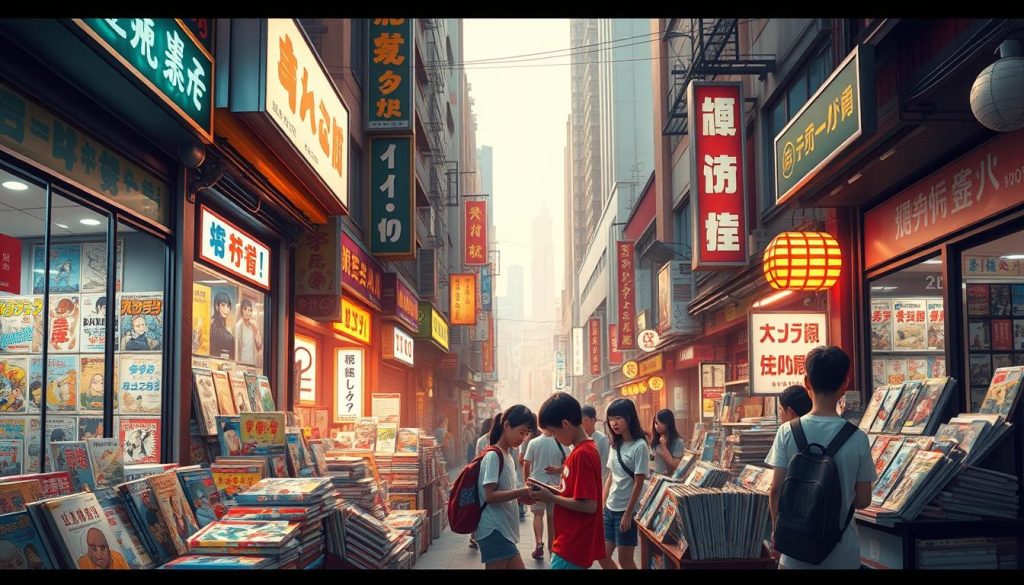
Asian comics are loved for their varied stories, colorful art, and cultural depth. Manga, manhwa, and manhua are popular not just at home but globally too. Digital platforms have helped spread them far and wide, reaching fans everywhere.
| Comic Style | Country of Origin | Notable Characteristics |
| Manga | Japan | Diverse genres, detailed artwork |
| Manhwa | Korea | Webtoon format, varied storytelling |
| Manhua | China | Traditional Chinese art influences, epic storylines |
Historical Context of Sequential Art in Asia
The history of comics in Asia is rich and varied. Each region has its own cultural and historical background. The growth of manga, manhwa, and manhua shows the social, cultural, and political changes in their countries. Knowing this history helps us understand the diversity and complexity of Asian comics.
Manga: The Japanese Comic Tradition
Manga has deep roots in Japanese history. It has grown into a global hit, loved by people of all ages. It started in the late 19th century, mixing Western comics and Japanese art.
Origins and Evolution of Manga
Manga began by blending Japanese art with Western comics. After World War II, manga became very popular. Pioneers like Osamu Tezuka led the way with new stories and art.
Distinctive Art Styles and Visual Techniques
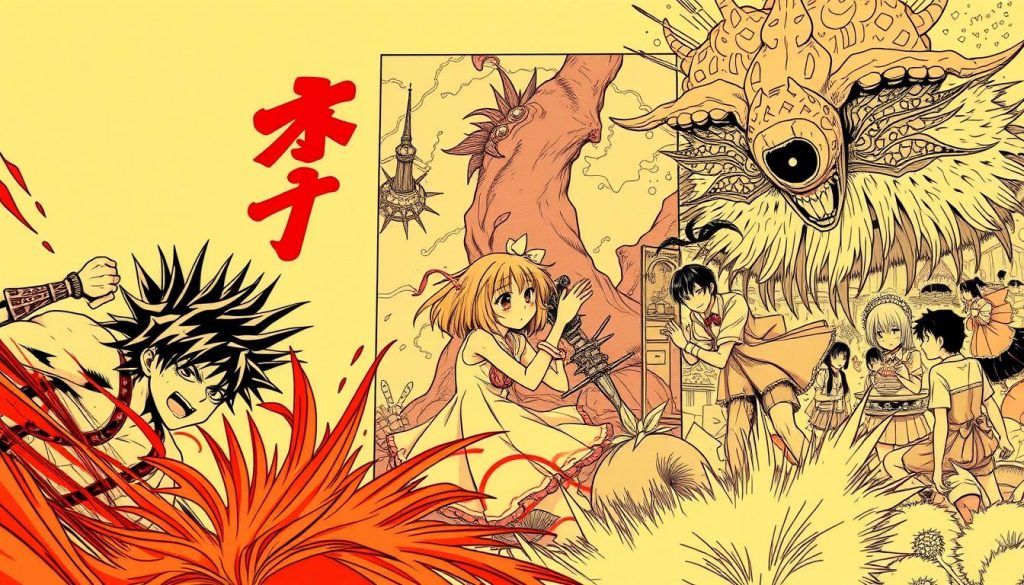
Manga is known for its many art styles. You can find everything from detailed realism to funny caricatures. Its unique panel layouts and character designs make it stand out.
Character Design Elements
In manga, characters often have exaggerated features and distinctive facial expressions. This makes them easy to remember and connect with. Hairstyles, clothes, and accessories also help tell characters apart.
Panel Layout and Pacing
The way panels are arranged in manga controls the story’s pace. Dynamic panel arrangements can make scenes feel urgent or dramatic. Traditional layouts help keep the story moving smoothly. Sound effects and visual metaphors also play a role in pacing.
Popular Genres and Publishing Formats
Manga covers many genres like action, romance, science fiction, and fantasy. You can find it in tankōbon volumes, magazines, and online. This variety appeals to many readers.
| Genre | Description | Target Audience |
| Shonen | Action-packed narratives often featuring male protagonists. | Young males |
| Shojo | Romance and relationships-focused stories, typically aimed at a female audience. | Young females |
| Seinen | More mature themes and complex storylines, targeting an older male demographic. | Adult males |
Manhwa: Korea’s Unique Comic Culture
Manhwa, Korea’s vibrant comic culture, is loved worldwide for its unique stories and art. This section explores Manhwa’s history, art, and themes. It also looks at how it has changed with the digital age.
The Development of Korean Comics
Manhwa started in the early 20th century. It was first influenced by Japanese manga. Over time, Korean comics developed their own style.
In the 1990s, Manhwa became more popular. It introduced new themes and art styles. Now, Manhwa is a big part of Korean pop culture, with many titles translated into other languages.
Artistic Characteristics of Manhwa
Manhwa is known for its distinctive art styles. It combines traditional Korean elements with modern techniques. Two key features are:
- Unique color usage and visual styling
- Innovative storytelling through vertical scrolling formats
Color Usage and Visual Styling
Manhwa artists use bold and vibrant colors. These colors make the story more emotional. Bright colors and detailed backgrounds add depth to the story.
Vertical Scrolling Format
The vertical scrolling format is a key feature of Manhwa. It offers a continuous and immersive reading experience. This format is very popular on digital platforms, where it boosts user engagement.
Popular Themes and Digital Revolution
Manhwa covers many genres, like romance, fantasy, action, and historical drama. The digital revolution has helped spread Manhwa globally. Many platforms offer online access to these comics.
Webtoons, a popular digital platform, has helped promote Manhwa worldwide.
The rise of digital platforms has made Manhwa more accessible. It has also changed how Manhwa is created and distributed. Many artists now make content for online audiences. They use digital platforms’ interactive features to connect with readers.
Manhua: China’s Rich Comic Heritage
Manhua is a special part of Chinese culture and storytelling. It has a long history and many visual styles. Chinese comics, or Manhua, draw from the country’s history, folklore, and cultural changes.
Historical Roots of Chinese Comics
The history of Manhua started in the early 20th century. It was influenced by traditional Chinese art and literature. Over time, different periods like the Republican era and the Cultural Revolution shaped its stories and art.
Early Manhua used satire and social commentary. This showed the ups and downs of Chinese history.
Visual Styles and Artistic Approaches
Manhua has many visual styles, from traditional ink paintings to modern digital art. Traditional Chinese art’s influence is clear in calligraphy, landscape painting, and folk art.
Traditional Chinese Art Influences
Traditional Chinese art adds a unique flavor to Manhua. Ink wash painting and symbolic motifs are often used.
Modern Stylistic Trends
Modern Manhua combines traditional techniques with new styles. This mix creates a fresh and exciting look for Chinese comics.
Common Themes and Modern Developments
Manhua explores many themes, from historical epics to fantasy and social issues. It has grown to include diverse stories, attracting readers worldwide.
Today, Manhua is available online, reaching readers globally.
The Difference Between Manhwa and Manhua: A Direct Comparison
To understand Manhwa and Manhua, we must look at their art and stories. Both are big in Asian comics but grew in different ways. This is because of their unique cultures and histories.
Art Style Distinctions
Manhwa from Korea is known for its dramatic and big expressions. It also has detailed backgrounds and characters. Manhua from China has a more varied style. It mixes traditional Chinese painting with action and fantasy.
Storytelling Approaches and Narrative Structures
Manhwa focuses on characters and their feelings. It has complex stories that talk about social issues. Manhua, on the other hand, combines action, adventure, and fantasy. It often uses Chinese myths and history.
Cultural Influences and Thematic Elements
Culture shapes the themes in Manhwa and Manhua. Manhwa talks about today’s Korean life, like school and family. Manhua shows China’s culture and stories, giving readers a peek into its rich heritage.
| Characteristics | Manhwa | Manhua |
| Art Style | Dramatic, exaggerated expressions, detailed backgrounds | Varied, influenced by traditional Chinese painting, action, and fantasy |
| Storytelling | Character development, emotional depth, complex plotlines | Action, adventure, fantasy, drawing from Chinese mythology |
| Cultural Influences | Contemporary Korean societal issues | Chinese culture, folklore, historical context |
In conclusion, Manhwa and Manhua are key parts of Asian comics. They differ in art, stories, and culture. Knowing these differences helps us appreciate each one’s special qualities.
Reading Formats and Accessibility for Beginners
Asian comics are now easier to get into, thanks to many formats. Beginners need to know about Manhwa, Manga, and Manhua to enjoy them fully.
Print vs. Digital Platforms
Asian comics come in print and digital forms. Print versions feel real, with paper quality and display options. Digital platforms are handy, letting you carry many comics on one device and get new chapters fast.
Digital is getting more popular. Publishers put their comics online. This makes it easy for new fans to find and enjoy Asian comics without needing space for books.
Reading Direction and Layout Differences
Asian comics read differently than Western ones. This can change how you enjoy them.
Right-to-Left vs. Left-to-Right vs. Vertical
Manga is read right-to-left, like Japanese books. Manhwa and some Manhua are read left-to-right for Western readers. Some Manhua are read vertically, from top to bottom.
Page Structure and Panel Flow
Page and panel layouts vary. Manga uses creative panel sizes and space. Knowing these differences can make reading better.
Where to Find Each Comic Type Online and Offline
You can find Manhwa, Manga, and Manhua online and offline. Online platforms include digital stores and official sites. Offline, check local comic bookstores or comic conventions for new titles and fans.
Popular Series Recommendations for Newcomers
Starting with Asian comics can feel like a big step. But don’t worry, here are some beginner-friendly series to help you begin. With so many great titles, you’re sure to find something you like.
Must-Read Manga Series for Beginners
Manga covers many genres and styles. For newbies, some essential series include:
- Attack on Titan by Hajime Isayama, a dark fantasy epic.
- Fullmetal Alchemist by Hiromu Arakawa, a fantasy adventure with a rich storyline.
- Death Note by Tsugumi Ohba and Takeshi Obata, a psychological thriller.
Essential Manhwa Titles to Start With
Manhwa, or Korean comics, offer a unique reading experience. Some must-read titles for beginners are:
- Noblesse by Son Jae-Ho and Lee Gwon-Hyeok, a sci-fi action series.
- The God of High School by Yong Jean-Park, a fantasy action series.
- Orange Marmalade by Seok-woo, a vampire romance series.
Recommended Manhua Works for First-Time Readers
Manhua, or Chinese comics, have a unique style and storytelling. For newbies, consider:
- Tee Gao, a historical fantasy series.
- Monster Hunter by Li Bin, a fantasy adventure series.
- The Grandmaster of Demonic Cultivation, a fantasy series based on the popular novel.
These popular series are just the start. Exploring these will give you a solid base in Asian comics.
Industry Trends and Future Outlook
The comic industry is changing fast, thanks to Webtoon platforms. This change is making how Manhwa, Manga, and Manhua are made, shared, and enjoyed different.
Digital Transformation and Webtoon Platforms
Digital platforms have made it simpler for creators to share their work worldwide. Webtoon platforms have been key, with their easy-to-use design and huge collection of stories. This digital shift is changing how we read comics and how they’re made, with more creators starting with digital versions.
Global Expansion and Cross-Cultural Influence
Manhwa, Manga, and Manhua are becoming popular all over the world. This is leading to a mix of different cultures in comics. Creators are adding new themes and styles, making comics more varied and exciting.
The comic industry is set to grow even more, with more digital platforms and global projects. As technology gets better, we’ll see new ways of telling stories in Manhwa, Manga, and Manhua.
Conclusion
The world of Asian comics is full of variety. Manhwa, Manga, and Manhua come from Korea, Japan, and China. Each has its own history, art style, and way of telling stories.
Manga is famous for its many genres and lively artwork. Manhwa has become popular online, thanks to Webtoons. Manhua, with deep roots in history, keeps changing with new themes and styles.
Knowing the differences between Manhwa, Manga, and Manhua makes reading more fun. As comics become more global, diving into these cultures enriches both readers and creators.